
Max will be giving talks and signing books in London and Canterbury during the week of October 26th, as follows…
Waterstones, Gower St, London: Weds 28th @ 6.30pm Details here.
Canterbury Festival, Augustine Hall: Thurs 29th @5.45 Details here
A new podcast on A Slice of Medieval has Max talking to Sharon Connolly and Derek Birks about all things Domesday and Bayeux Tapestry. It’s on You Tube too:
Podcast: https://soundcloud.com/user…/bayeux-tapestry-domesday-book

Max has been at Chatterbox Audio this month, recording the audiobook for Domesday: 1,000 miles through the England of the Norman Conquest, released on Sept 3rd. And on August 4th he signed the first 500 copies of the hardback, destined for bookshops across the UK. From Sept 3 signed copies will be available diectly from the Signed books page on this website.
Domesday Launch events Autumn 2026
Signings and festival talks
Morpeth Tuesday Sept 1 at Waterstones bookshop
Durham Weds Sept 2 at Waterstones bookshop
Malton Monday Sept 7 for Kemps bookshop Eventbrite booking page here
Cambridge Tuesday Sept 8 at Blackwells bookshop
Bath Wednesday Sept 9 at Waterstones bookshop
Guildford Thursday Sept 10th at Waterstones bookshop
Basingstoke Friday Sept 11 at Waterstones bookshop
Gloucester Saturday Sept 12 at the Gloucester History Festival
York Friday 18th Sept at Waterstones bookshop
Warwick Tuesday Oct 6 at Warwick Words literary Festival
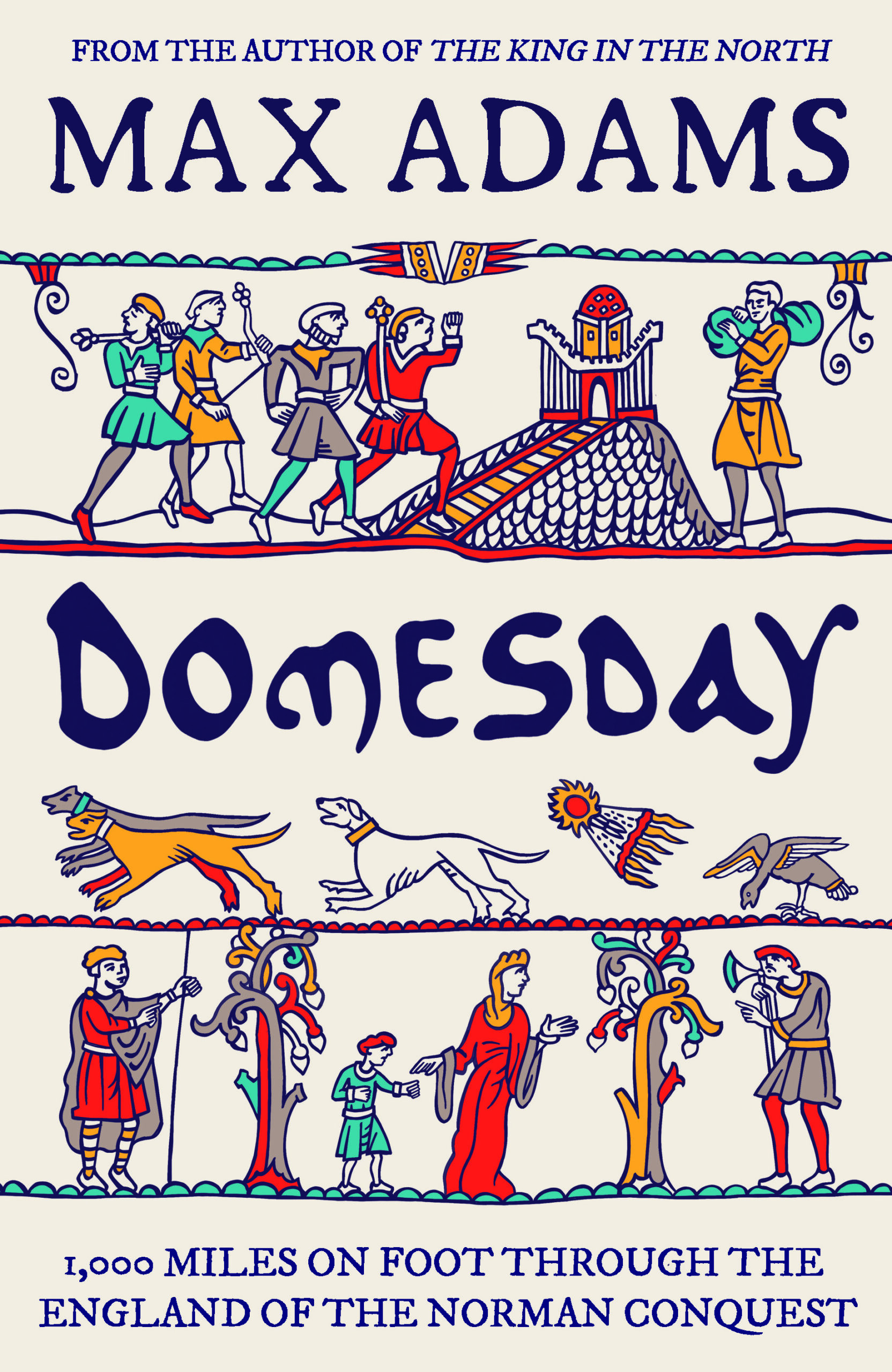
Max talks about his new book, Domesday…
The Bayeux Tapestry is coming to town! The launch of the first ever UK viewing of the Bayeux Tapestry in a year-long exhibition at the British Museum will coincide with the release of Max’s book Domesday, for which he has walked nearly 1,000 miles across ten counties, immersing himself in the landscapes of the Norman Conquest and reflecting on the huge changes that have happened in English villages, towns and cities since 1086. Max will be feeding snippets here from time to time as the book goes through its editing and production process over the winter of 2025 and Spring of 2026…
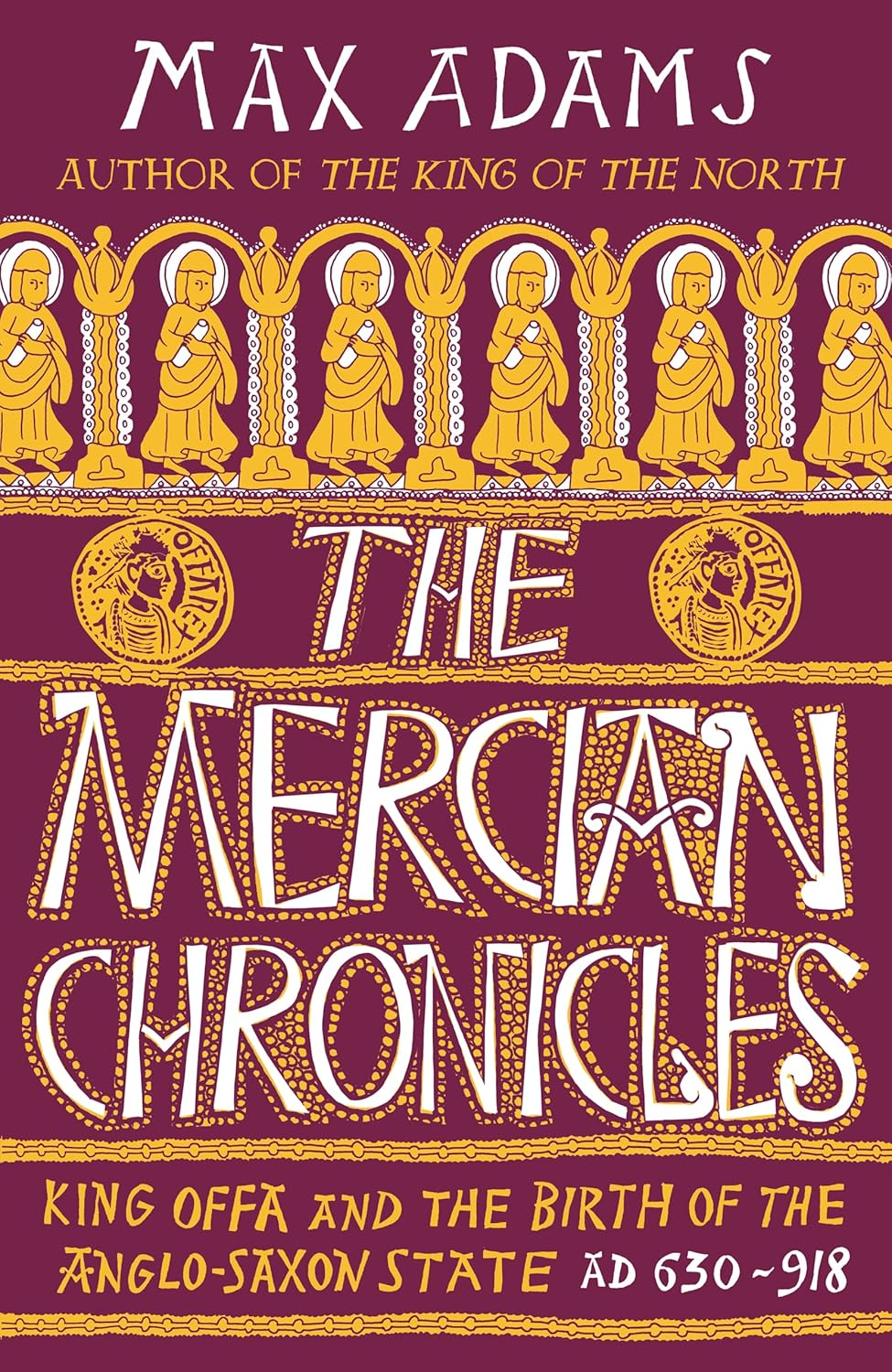
Watch Max’s podcast interview with historian Graham Scheper, recorded in January. They talk in depth about The Mercian Chronicles and Northumbria, Max’s latest two books. And The Mercian Chronicles will shortly be available in paperback (Feb 12, 2026)
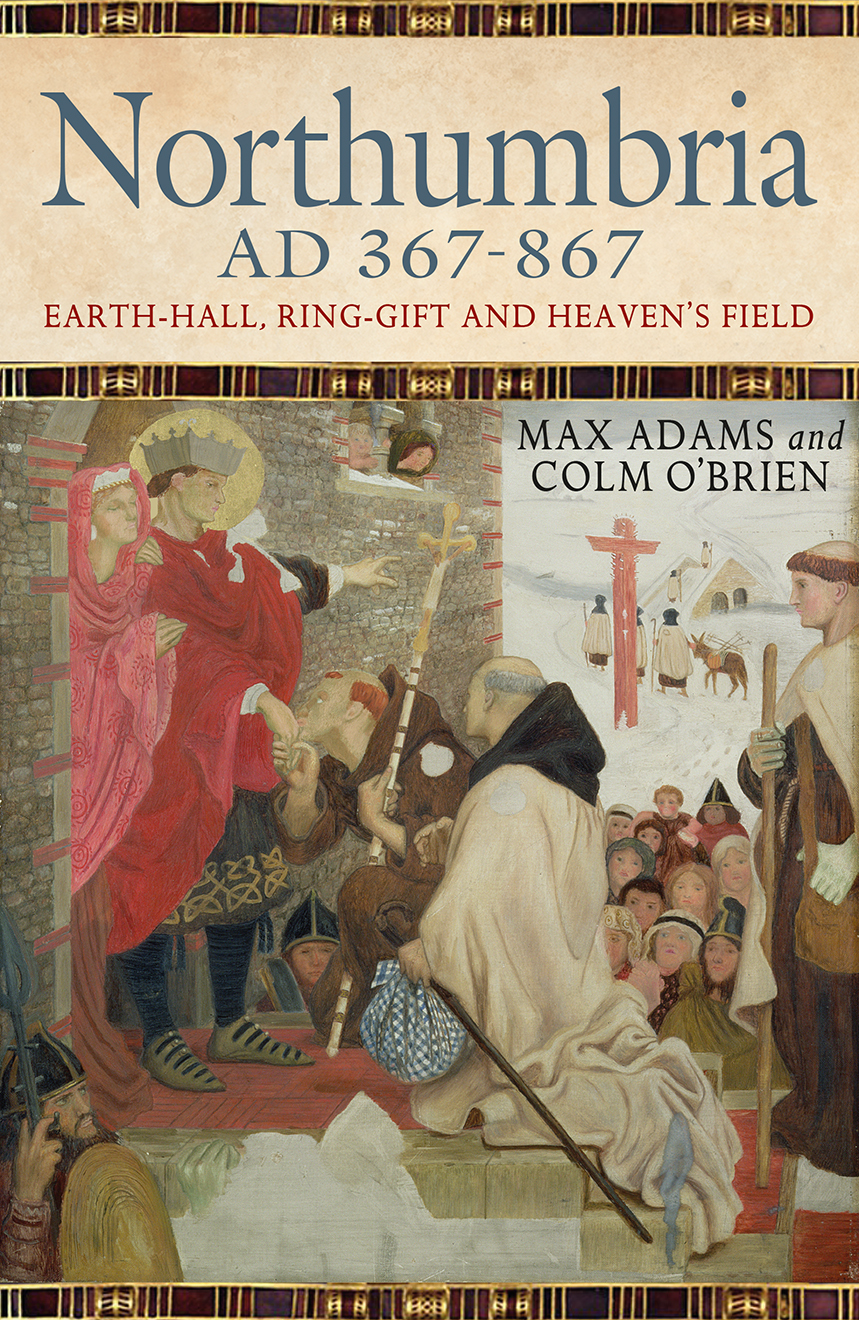
Northumbria, co-authored with his colleague and friend Colm O’Brien, takes a fresh look at the Early Medieval kingdom of Northumbria. Here’s the cover, which uses a painting of King Oswald and St Aidan by the great pre-Raphaelite artist Ford Maddox Brown. Signed copies available from the shopping tab on this page.
The Mercian Chronicles
Published 13th February 2025; paperback edition February 2026

‘A fabulous book: Max Adams breathes warmth and life into the monarchy of the early English kingdom of Mercia.’ Francis Pryor
‘Genius history’ ☆☆☆☆☆ Daily Telegraph
Order signed copies now from Max’s Buy signed books page
The eighth century has for long been a neglected backwater in British history: a shadow land between the death of Bede and the triumphs of Ælfred, which saw the rise of Wessex as the dominant Anglo-Saxon kingdom and the eventual unification of England. But before the hegemony of Wessex, the kingdom of Mercia – spread across a broad swathe of central England – was the dynamic heart of a kingship that discovered the means to exercise central political authority for the first time since the Roman empire. That authority was used to construct trading networks and markets; develop strong economic, cultural and political links with the Continent, and lay the foundations for a system of co-ordinated defence that would be reinvented by Ælfred at the end of the ninth century. This is also the period in which England’s much-loved and studied place names were largely formed and when the geography of our parishes was crystallised.
Two kings, Æthelbald (716-757) and Offa (757-796) dominate the political landscape of the rising power of Mercia. During their reigns monasteries became power houses of royal patronage, economic enterprise and trade. Offa constructed his grandiose dyke along the borders of the warlike Welsh Kingdoms and, more subtly, spread his message of political superiority through coinage bearing his image. But Æthelbald and Offa between them built something with an even more substantial legacy – a geography of medieval England. And they engineered a set of tensions between kingship, landholding and church that were to play out dramatically at the dawn of the Viking Age.
In this, the latest in his admired sequence of histories of Early Medieval Britain, Max Adams re-connects the worlds of Oswald, Bede and Ælfred in an absorbing study of the landscape, politics and society of a fascinating century of change.
Max will be talking about and signing copies of The Mercian Chronicles at the Gloucester History Festival on April 25th and at the York Festival of Ideas on May 31st. He is also appearing at the Chelsea History Festival on September 25th and at Warwick Words on October 2nd.
** Please note that The Birth of the Anglo-Saxons, published in March by Pegasus, is the US edition of The Mercian Chronicles, not a different book.**
The Museum of the Wood Age
… was published in hardback on Sept 1st 2022
The Age of iron began in 1779. before that, all of human history was one long… Wood Age.
I have been on a journey through the veil of history, to an age when wood was the supreme material expression of human endeavour; when all people knew its properties and uses and its value in their lives. I am looking for stories and objects that trace the path of human ingenuity, art and craft across half a million years: along the great cultural adventure that separates us from our fellow creatures. Humans are, above all, a technological species and the manuscript of our evolution is bound in wood: a brain that could conceive abstract ideas and futures; a hand with which to manipulate our environment. Wooden objects are the fossil record of human creativity, written as much in the sum of human knowledge in construction, travel, art and technology as in the discarded physical objects of the past; more so, in fact.
In The Museum of the Wood Age I have gathered those stories and objects together into a virtual space – a museum of ideas and connections. I show how a small number of simples devices known to early modern hunter-foragers became axioms for a set of technologies that allowed humans to explore all their creative ingenuity; to fashion new ecologies for themselves. From bow and arrow to wheeled vehicles, bonfires to forges, canoes to ocean going ships; from pallets and barrels to mills and the construction of an Elizabethan theatre, this is a unique exploration of our relationship with the material that made us what we are.


